
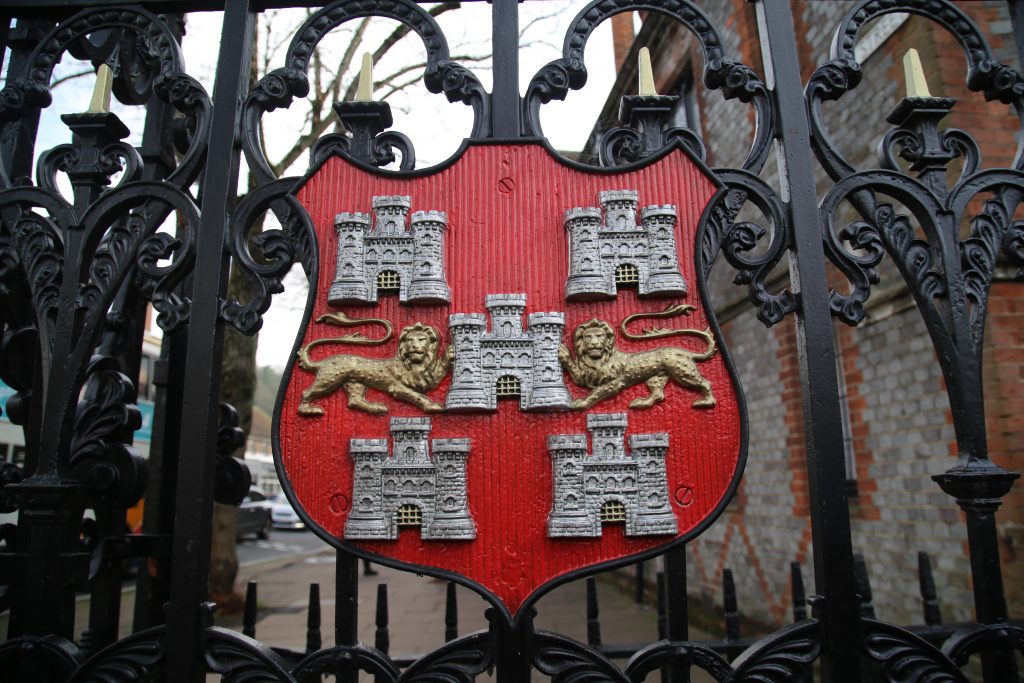
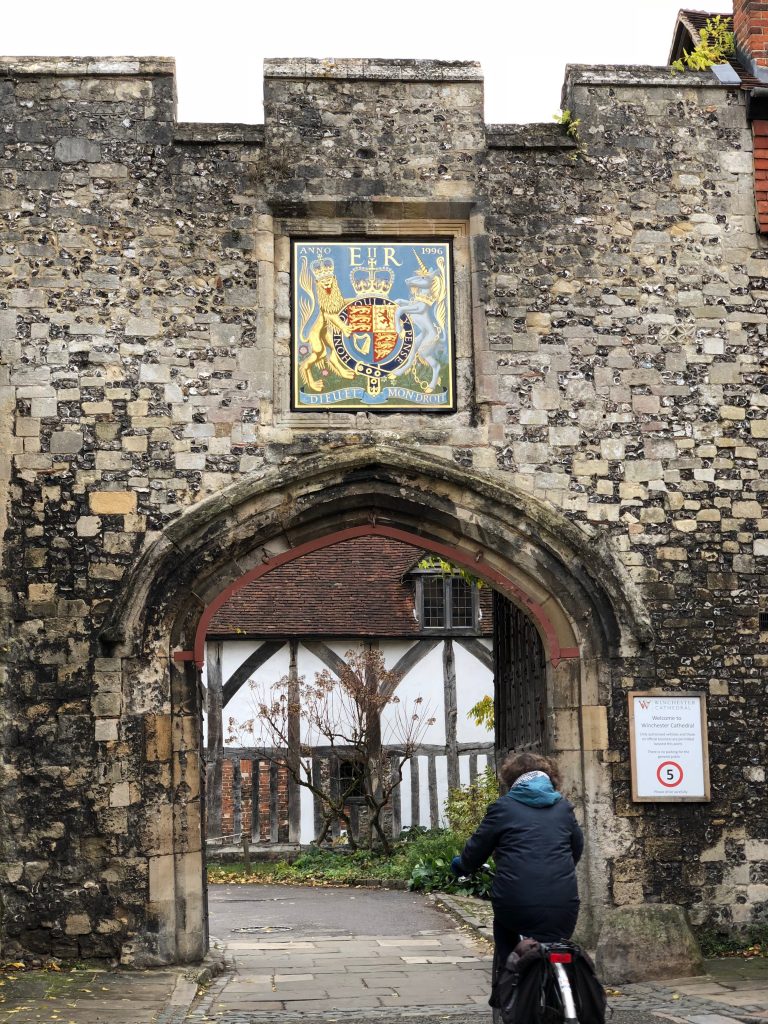
I’m re-acquainting myself with British history via TV series such as The Last Kingdom and Vikings. Both series feature the ninth century King Alfred, whose capital was in Winchester, in the former county of ‘Wessex’. Winchester is dominated by an enormous bronze statue of Alfred the Great, so called because he was the first monarch to unite England.
Cathedral:
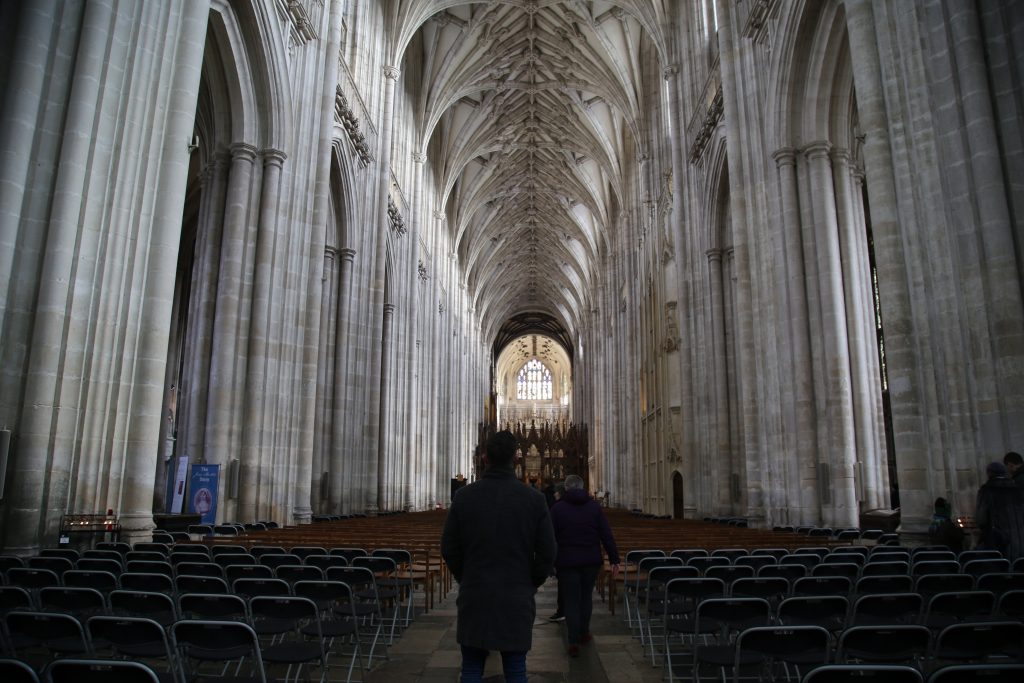
Winchester was firstly a Roman capital for centuries, then around the time of Alfred, the ninth century, became the capital of Wessex. Like Durham, the town boasts an impressive and historic cathedral, containing celebrity relics such as those of St Swithun, King Canute and Jane Austen.
St. Swithun, an Anglo-Saxon bishop, taught King Alfred. There is a memorial dedicated to him behind the main altar. The legend is that if it rains on the 15th of July, St Swithun’s day, it will rain for 40 days and nights.
Jane Austen only lived in Winchester for the two months before she died, having moved there to see a medical specialist. You can see the brass plaque on the wall and a small exhibition celebrating her writing.
King Canute invaded England in the 10th century, about 50 years before William the Conqueror. He was king of the North Sea Empire which covered Norway, Denmark and England. His bones rest in Winchester Cathedral.
One of the most strikingly beautiful things about the cathedral is the 13th century tiled floor – it’s the largest collection of encaustic tiles in the world.
Town, Winchester City Mill and River Itchen
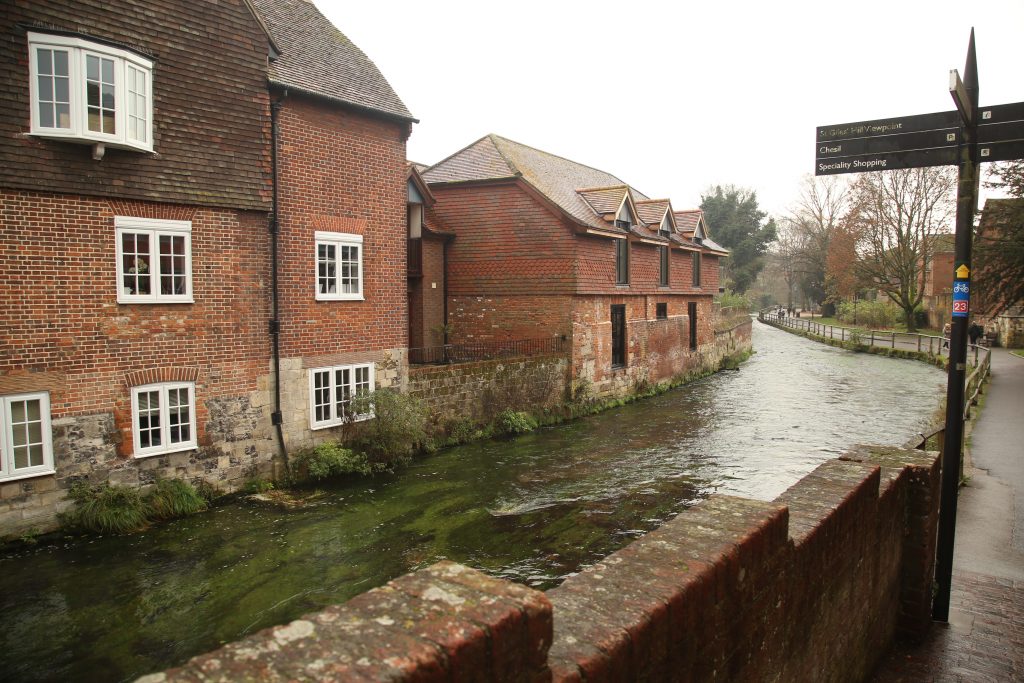

Winchester has a bonny collection of timbered buildings, a cobbled pedestrianised high street and the first public school, which dates from before Eton.
The river Itchen runs through the town, under a refurbished working water mill, where flour is still milled. The water is particularly clean, the surrounding land containing chalk. This similarity of terroir to the Champagne region is one of the reasons that English sparkling wine is grown around Winchester and throughout Hampshire.
I toured the town with a Blue Badge Guide, and saw Jane Austen’s small yellow house, with a blue plaque. Winchester boasts a busy picturesque Christmas market, selling chestnuts, grilled marshmallows, mulled wine and crafts.
Where to eat and stay.
[Best_Wordpress_Gallery id=”8″ gal_title=”All images”]Kyoto Kitchen is a culinary jewel in the centre of Winchester: traditional Japanese food with some fusion dishes such as the ‘Winchester roll’, sushi wrapped in watercress, another local ingredient.
I stayed just outside Winchester, at the 17th century Lainston House, an enormous historic hotel with a cookery school ‘Season’ attached. The room I had was the size of a London flat, with beamed ceilings, complimentary chocolates, a large bathroom with roll top bath, a TV and underfloor heating.
Afternoon tea was held in an elegant blue room, drinks in the panelled bar with leather seats and an excellent tasting menu by chef Andrew Birch at The Avenue restaurant. In the morning I took a stroll in the grounds to see their menagerie of owls and the walled kitchen garden.
Wine, watercress and wasabi
Winchester had a wine fair on the weekend I visited. I tasted local sparkling wines such as Raimes, Black Chalk (very good), Hattingley (who make a rare Demi-sec as well as the classic Brut), and Exton Park vineyard, the latter run by Corinne Seeker, who left France for Britain to join the nascent English sparkling wine industry.
Watercress and wasabi are also local ingredients from Winchester. My next post will describe my visit to the Wasabi farm.
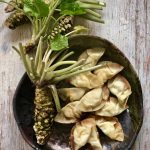
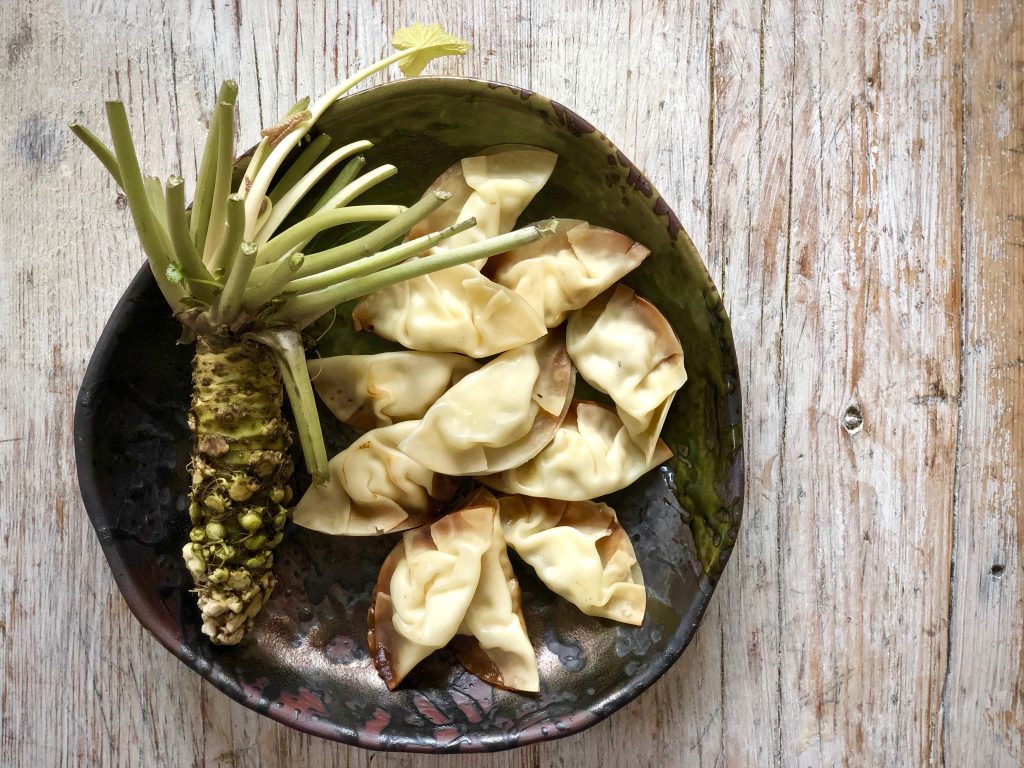
Wasabi and Cream Cheese Gyoza
Ingredients
- 1 pack gyoza wrappers, available from any Asian shop
- 200g pack cream cheese
- 1 stick wasabi, grated or paste, fresh if possible or in a tube
- 1/2 tsp sea salt
- 3 tbsp groundnut oil
For the dipping sauce
- 2/3 tbsp Black vinegar, You could also use ponzu sauce
Instructions
- Grate the fresh wasabi into the cream cheese with the salt and mix. If you can’t get hold of fresh wasabi, use wasabi from a tube (available at most supermarkets)
- Lay out one of the gyoza skins from the pack. Have a small bowl of water at the side.
- Put a small ball of the cream cheese/wasabi mix into the centre of the gyoza.
- Wet the edges of the skin with water.
- Working quickly, fold over one side, pleating it into 4 pleats, to join the other half. You should have a crescent shape.
- Add groundnut oil to a wide frying pan and heat to a medium temperature.
- Place the gyoza crescents onto the pan, not touching each other, until there is no more room. You may have to repeat this process 2 or 3 times or until the pack is used up.
- Fry until golden on the underside, then add a splash or two of boiling water (from the kettle if you wish) and put a lid over the pan. (If you don’t have a lid, you can use a sheet of tin foil).
- Continue to fry for 3 to 5 minutes. Uncover the pan and serve the gyoza hot with the dipping sauce.

You have become my travel quide. Already done a Fred Olsen cruise after reading your blog so now it is Winchester probablt in the spring.