
Fantasy tends to treat food in a historical or fantastical way, with feasts as an integral part, while SF often neglects food or has strange, alien food often unappetising or disgusting. This slide show demonstrates how often Sci-Fi writers resort to worms or insects as a dish.
Futuristic apocalyptic works like The Walking Dead and The Road show ‘food insecurity’, where people resort to cannibalism in a post-scarcity society. In The Hunger Games, people in the districts have little to eat, while the citizens of the capital use roman-style vomitariums to throw up their opulently excessive dinners. In The Hobbit, trolls eat rocks, a very particular food culture. In Terry Pratchett‘s novels, dwarves eat bread and rats. The world of Harry Potter features gothic banquets with constantly replenishing platters of food apparating through the walls of the kitchens and, intelligently, J. K. Rowling spent time on creating enticing sweets for the Hogwarts Express train trolley. Nor is growing ignored, with herbs, roots and potions grown in the school gardens and greenhouse.
Alcohol is another popular component of realistic world-building in fantasy and Sci-Fi from the Pan-Galactic Gargleblaster of Hitchikers Guide to the Galaxy, to Romulan Ale in Star Trek, Butterbeer in Harry Potter and Ent-draught in Lord of the Rings. For non-alcoholic drinks there is blue milk in Star Trek and miruvor, an elven cordial in Lord of the Rings.
I remember visiting the space museum in Washington, where, as a souvenir, one could buy dehydrated ‘ice cream’. This is what astronauts ate in space, we were told. The ‘smash’ advert (above), very popular in the 70s, featured robots who found it hilarious that people would peel, boil and mash a potato when it’s so much easier to pour a little boiled water into a dry powder, which ingeniously fluffs up into mashed potato. Space travellers ate pills or meals in sachets, there is no flame in space, no browning, no Maillard reaction.
The original magic food, that which gives you knowledge, cited in the bible is the apple, but the term apple was used for many foods, for instance potatoes are pommes de terre, ‘earth apples’. This article suggests that the apple of Adam and Eve was in fact wheat.
As a chef, it’s difficult to genuinely reproduce magical foods. For the Harry Potter meal I used miraculin berry, which transforms anything sour into a sweet foodstuff and popping candy to make ‘jumping’ chocolate frogs. Dry ice can be employed to add atmosphere and mysticism to drinks and presentation. Chewing fresh Stevia leaf is another strange experience, a herb sweeter than sugar. I recently blogged about geoducks, giant long-necked clams that grow up to a metre long, reminiscent of the sandworms in Dune. When travelling through Peru, I often drank chicha, a refreshing soft drink fermented by local women chewing and spitting the fruit.
In Game of Thrones, there are plentiful descriptions of meals; there is even a website and cookbook devoted to the food from the books. Feasting is often the backdrop to something violent and the food doesn’t get eaten. Are banquets inherently dangerous? (Just think of christmas with your family.)
Each part of G RR Martin’s realm has a different cuisine: the Dothraki have a horse culture and eat horse; the capital, King’s Landing have feast or famine (the poor eat ‘bowls of brown’, which could be anything); the southern region of Dorne has a more mediterranean style diet; the wildlings hunt what they can; on the wall food is plain and filling, often preserved including dried fruits, food you can carry to sustain you in war. Game of Thrones food is recognisably English for the most part, recipes often reminiscent of medieval times, apart from in Dorne and on the continent, ‘across the narrow sea’.
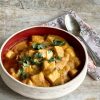
For this Saturday’s Game of Throne tea party here is a potential menu:
Can readers think of any other food and drink in fantasy/Sci-Fi fiction? Is there anything you’d love to taste?

Oooh you were at Nine Worlds? Then that was YOUR talk I so very much wanted to go to and didn't make. Very much too bad. I absolutely love the sound of all of these.
It was such an interesting conference. I also did a workshop with people who wanted help with recipe writing for fantasy/Sci-fi books which was fun. Love your handle btw
Nice post.
Great post. Would have loved to attend that tea party!
“post-scarcity society”
You keep using that word, I do not think it means what you think it means
What does it mean then?
He’s right. It means “after the time of food scarcity.” In other words – there is plenty of food. So they would not resort to cannibalism, as you said.